Electrics –
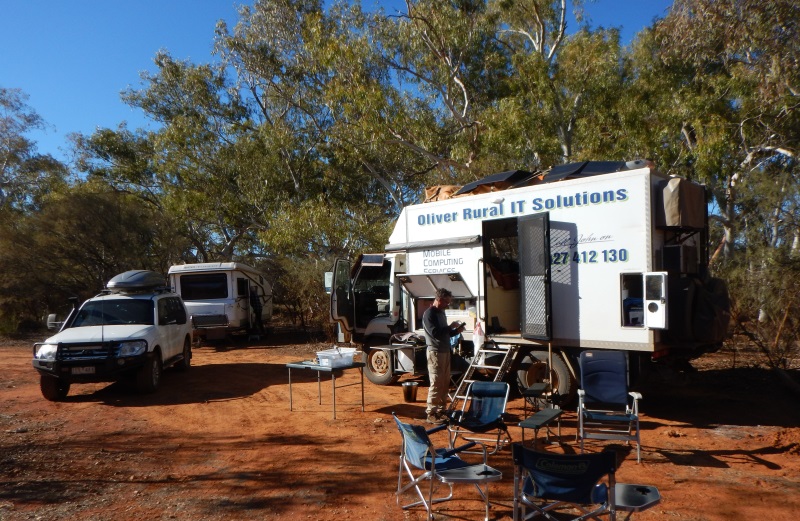
An area that needs careful planning and selection of components. Compatibility and the ability to meet your requirements must all be considered prior to any action.
Solar installations may make it possible for you to reduce your operating costs, and possibly even be fully off grid.
The main components of a solar setup include the solar panels, a battery, wiring, fuses, switches,12 volt appliances, an inverter.
Some of the appliances that you will consider are essential, others are optional. This could include a fridge, stove or cooktop, oven & or grill, kettle, coffee machine, computer, charging station for devices, etc.
240 volts can be available when connected to an external power source, say at a caravan park, camping ground, or at home.
You may want to have 240v when off grid and this means adding an inverter. Selection of the size of inverter is critical, a small one may be all you need if its just for a few small devices but if you want to operated things like a kettle or electric cooktop than a much larger one is essential. We have a 3000W inverter so we can use all appliances wherever we are without too much worry. My kettle and coffee machine are the most used appliances on the 240, almost always through the inverter supply.
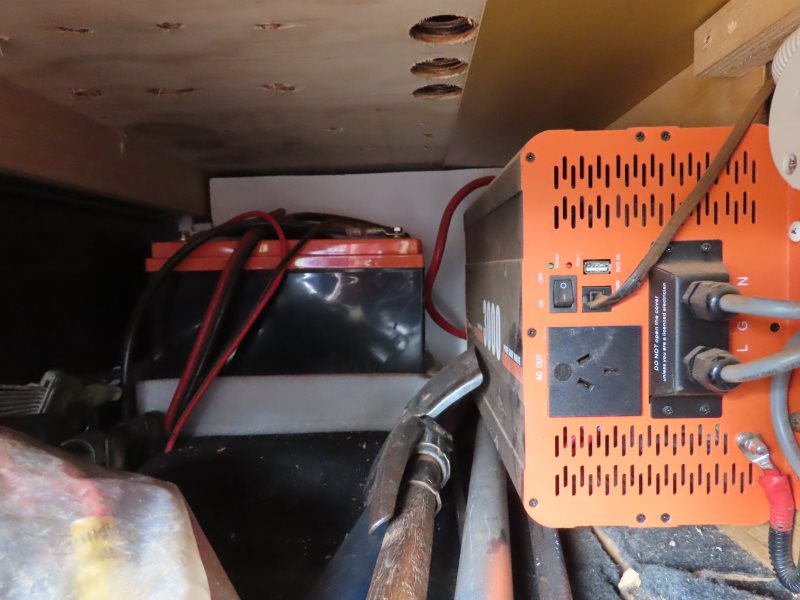
There are 3 batteries (3x120ah) available to the inverter (3000W). Even though it is off the remote (diagonal cable) means we can turn it on from inside anytime. The two grey cables are the 240V supply to the fuse box and ultimately all the power points.
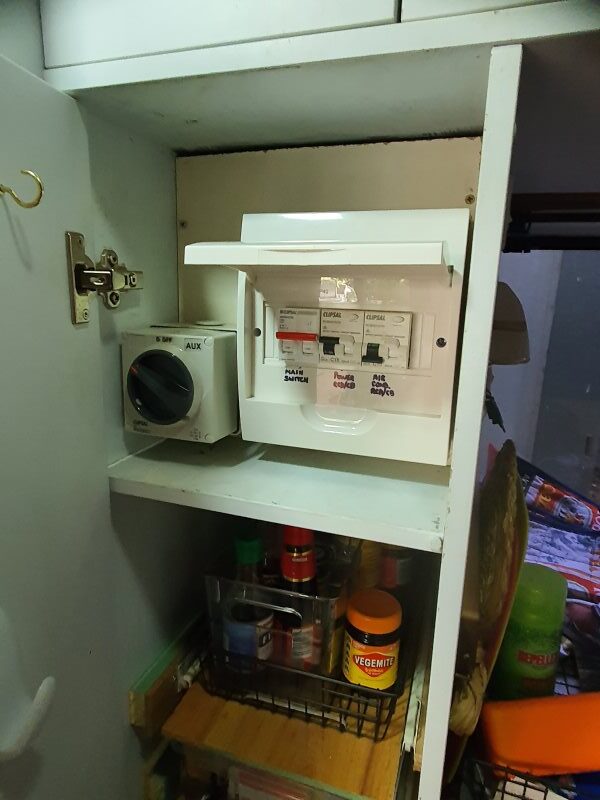
The 240V fuses are fed from the inverter via the isolation switch (on the left) which means we can change from mains input or inverter input, or OFF (no input) quickly and easily without having to fiddle.